
New York isn’t losing a few people. It’s quietly emptying out — 78,000 of them, gone, in a single year. Not to another country, not off the grid, but down I-95 and straight into Atlanta.
Here’s the part nobody says out loud: this was never really about the cold. It’s a math problem — taxes, rent, square footage — and most New Yorkers don’t run the actual numbers until they’re already stuck paying them. Run the math, and the risk flips. Staying starts looking like the expensive decision.
Most of my New York clients start the conversation the same way. They’ve already looked at houses online. They know, at least theoretically, that their money can go further here. But that’s usually not what they’re really asking me.
What they actually want to know is: am I going to like living there? One client’s real question wasn’t whether she could find a cheaper house. It was whether she could build a life here that felt like an upgrade, not a compromise. She wanted a beautiful home, a real community, and access to the things she cared about. She didn’t want moving South to feel like settling.
That’s something people misunderstand about New Yorkers moving to Atlanta. They’re not looking for cheap. They’re looking for value. Once we stopped talking about “Atlanta” as one place and started looking at communities that actually matched the life she wanted, the question changed. It went from “what am I giving up?” to “wait, I can have this here?” That’s usually the moment it clicks.
That’s the thing about a move like this — it’s never really about the house. It’s about whether you can picture your actual life on the other side of it: the grocery run, the commute, the Saturday morning. New York gives you energy. Atlanta gives you room to breathe. Most people trying to decide between the two are really asking a much smaller question. Can I keep what I love about my life and lose what’s been draining me?
This isn’t a highlight reel of Atlanta trying to convince you to leave New York. It’s the same breakdown I walk relocation clients through on their first call: what changes, what it costs, and where you’d actually want to land.
1. Why New Yorkers Are Actually Leaving
[VIDEO EMBED GOES HERE — “Moving From New York to Atlanta in 2026” — swap this note for the YouTube embed once the video is live.]
Let’s start with the number, because it’s a real one, and it’s worth knowing where it comes from. According to Opendoor’s 2026 migration report, New York City had a net domestic outflow of roughly 78,000 people last year. That’s not people leaving the country — that’s 78,000 people packing a truck and choosing somewhere else in America. Meanwhile, the same report shows Georgia gained about 48,000 net domestic migrants, specifically calling out Metro Atlanta as “a magnet… for families relocating from the Northeast.”
Not every migration report agrees on the exact size of that number — different sources measure this differently. But the direction every one of them agrees on is the same. People are leaving New York, and Atlanta is one of the places absorbing them.
It’s rarely one big reason. It’s usually three small ones stacked on top of each other until the math stops making sense. Here’s what they are: the cost of staying, the tax bill nobody budgets for, and the space you’re not getting for what you’re paying. Each one gets its own numbers below — not vibes.
2. The Real Cost-of-Living Gap

Here’s the number that surprises people most: overall cost of living in New York, including rent, runs about 59.6% higher than in Atlanta. Strip out rent and just look at everyday costs — groceries, transportation, going out — and Atlanta is still roughly 25% cheaper across the board.
Break it down further and rent is the real story. Rent prices in New York run about 133.5% higher than in Atlanta. For a lot of people, that means what you’re paying for a one-bedroom in New York gets you something meaningfully bigger here. Sometimes even with an actual yard.
Groceries run about 13% higher in New York. Restaurants run about 7.5% higher. Individually, those don’t sound dramatic. But stack a 13% grocery premium and a 133% rent premium on top of each other every month, for years, and it adds up fast. That’s why people run the math and then make the move.
I call this sticker shock in reverse. In New York, you get used to paying a premium for almost everything tied to your lifestyle, especially housing. So when clients start looking here, the reaction isn’t “that’s inexpensive” — it’s disbelief.
One New York relocation client ultimately bought a brand-new home here for under $500,000. It wasn’t a case of buying something affordable and spending the next year making it feel like home. The home was professionally furnished by an interior decorator. She wasn’t just buying a house under $500,000; she was stepping into an entirely different lifestyle.
To be clear, Atlanta isn’t cheap anymore — there are neighborhoods here where $500,000 won’t get you what people picture when they hear “Georgia.” But there are also communities where a New York budget goes further than people expect, and that’s the kind of sticker shock worth having.
3. The Tax Difference Nobody Explains Properly

This is the part almost nobody breaks down clearly, and it’s one of the biggest levers in this whole decision.
New York’s combined state and New York City income tax can run up to about 14.8% at the top end. Georgia’s is a flat 4.99% as of 2026 — no city income tax layered on top, no separate bracket for New York City residents specifically.
Put real numbers on that: at $100,000 in income, a New York City resident pays roughly $10,452 in combined state and city tax. In Georgia, that same income owes about $3,524 — a difference of nearly $6,928 every year. At $150,000, it gets bigger: about $16,302 in New York versus roughly $6,119 in Georgia, a gap of just over $10,183 a year.
Run that forward five years, and it’s not just a nicer lifestyle in Atlanta. It’s tens of thousands of dollars that either goes to two different state governments, or stays in your own account. That’s not a lifestyle difference. That’s a compounding financial decision.
To be fair, if you’re coming from upstate New York rather than the city itself, that local tax layer isn’t there. The gap is smaller there — closer to $3,000 a year at that same income level. Still real, just not quite as dramatic as the NYC-to-Atlanta version.
4. Housing: What Your Money Actually Buys You Here

Right now, the median home price in metro Atlanta sits around $395,000. That isn’t nothing. But put it next to what that same rent-adjusted dollar buys in New York, and the picture changes fast.
Remember that 133.5% rent gap from earlier? That same math shows up on the buy side. What buys a one-bedroom with a view of an air shaft in New York gets you a real house here. Think a garage, extra bedrooms, and a home office that isn’t carved out of a closet.
For instance, one client came to Atlanta wanting more than a Georgia address. She wanted her lifestyle to actually improve. As a result, she bought a brand-new construction home for under $500,000—professionally furnished by an interior decorator.
Because it was new construction, she didn’t inherit a twenty-year-old kitchen or spend money on immediate renovations. In contrast, that same budget in New York puts you in a small condo with shared walls and zero outdoor space.
I tell New York clients not to bring their New York housing budget here and assume they need to spend all of it. Figure out what you actually want first: bedrooms, a home office, a guest room, a yard, a garage, new construction, community amenities. Then find out what that lifestyle actually costs here. Sometimes you can upgrade your housing significantly without upgrading your housing expense. That’s what happened for this client. She landed a brand-new, professionally furnished home for under $500,000 — not just more square footage, but a different experience of home.
Here’s where it’s worth pushing back a little, too. A lot of New York transplants want the exact same neighborhood energy they had — walkable, dense, something happening outside their window at all hours. That’s a real preference, and a fair one. But it also means you shouldn’t default to whatever suburb has the biggest yard for the money, because that might not actually be your lifestyle. Which is exactly why the neighborhood question matters more than the price-per-square-foot question.
5. Best Atlanta-Area Options for New York Transplants
“Move to Atlanta” isn’t a plan — it’s a starting point. Here’s where that starting point actually leads, depending on what you want your life to feel like.
Dunwoody: For Density and a Short Commute

You want density, walkability, and something that still feels like it has a pulse after 9 p.m.? You’re probably not looking at the far suburbs at all. Neighborhoods along the BeltLine fit that brief. So does Dunwoody, with one of the shortest commutes into Buckhead and the Perimeter of any Atlanta suburb — without losing that closer-in energy.
East Cobb and Alpharetta: For Space and Schools
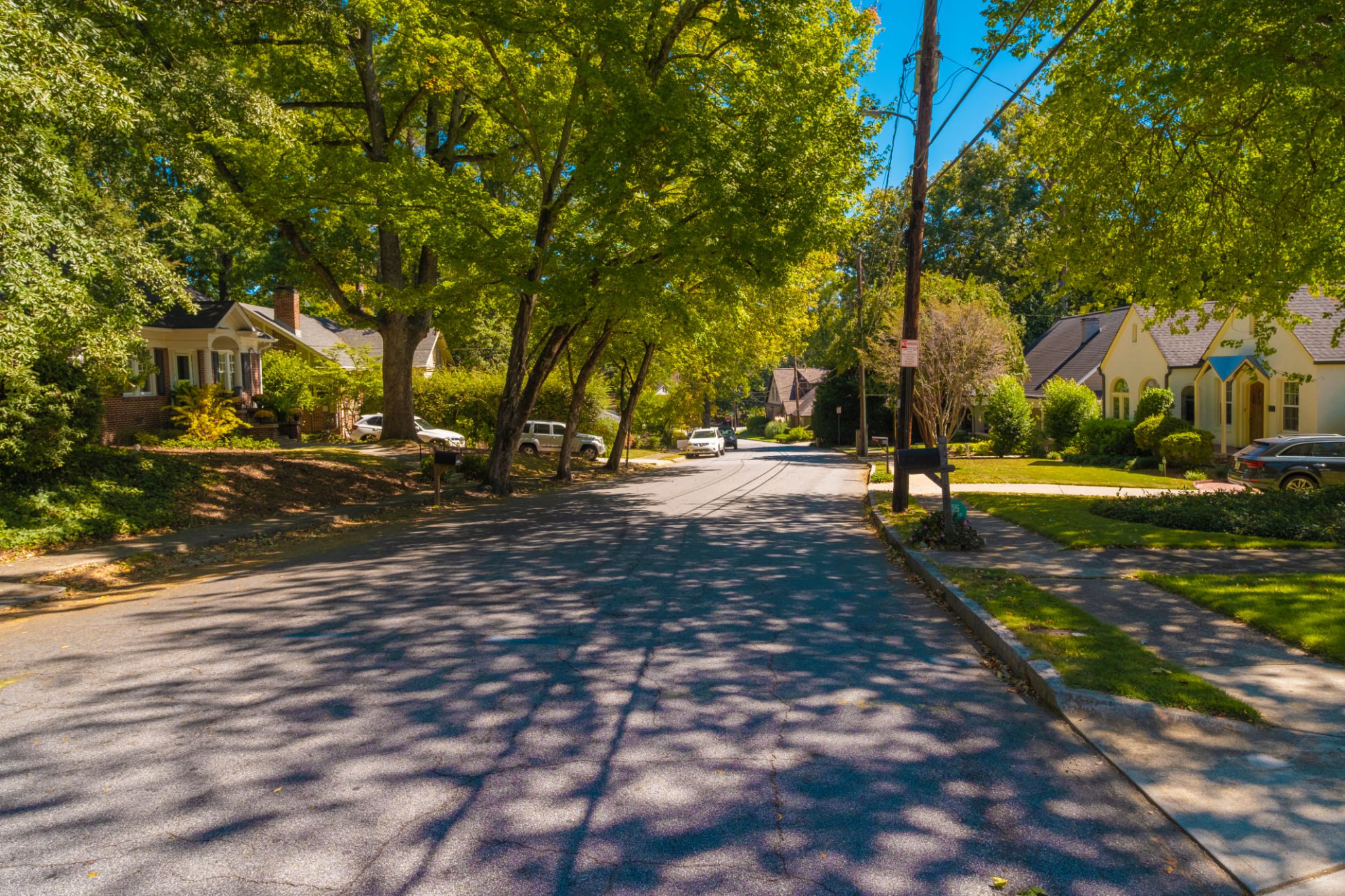
Want space, quiet, and a school system that makes the whole move worth it for your kids? Look at East Cobb or Alpharetta. Both give you real square footage and top-tier schools, at a fraction of what equivalent space costs in the tri-state area.
Woodstock and Towne Lake: For a Walkable “Downtown but Smaller” Feel

Want that walkable, main-street feel? Think restaurants you can walk to, a slower pace than Manhattan without losing all the energy. Woodstock and Towne Lake are worth a serious look.
Milton: For Space, Privacy, and Room to Spread Out

Craving the opposite of New York entirely — more land, a quieter pace, room to actually spread out? That’s Milton. It’s where a lot of relocation clients end up once they realize how much house that New York rent payment actually buys.
None of these is “the best” one across the board. They’re right for different versions of what you actually want your life to feel like. That’s exactly why the first real conversation with any relocation client isn’t about listings. It’s about your actual daily life: commute tolerance, how you spend a Saturday, whether you need noise or quiet to feel at home.
6. What Actually Surprises New Yorkers Once They Get Here

A few things catch almost everyone off guard, good and bad, so it’s worth getting them out in the open.
You will need a car. Atlanta is not a subway city, and if you’ve spent the last decade without owning one, that’s a real adjustment. Budget for it honestly, not as an afterthought.
The humidity is real, and no amount of “I grew up in Northeast summers” prepares you for a June afternoon here. That’s not a dealbreaker for anyone who’s actually moved here, but it’s better to know it going in than discover it on move-in day.
What surprises people most, though, is usually the pace of people, not the pace of the city. Atlanta moves fast in plenty of ways — traffic, growth, opportunity. But the day-to-day social rhythm is slower and warmer than most New York transplants expect. Neighbors actually introduce themselves. That can feel disorienting for about a month, and then it becomes the thing people say they didn’t know they were missing.
And the last one: space changes how you live, not just where you live. A guest room. A home office that’s actually an office. A yard your kids or your dog can use without a leash law and an elevator between them and grass. People don’t always predict how much that changes daily stress until they’ve had it for about ninety days.
Frequently Asked Questions
Q: Is it actually cheaper to live in Atlanta than New York?
A: Yes, by a meaningful margin. Overall cost of living, including rent, runs about 59.6% higher in New York than in Atlanta, and even excluding rent, everyday costs are roughly 25% higher in New York. On the tax side, New York’s combined state and city income tax can reach about 14.8% versus Georgia’s flat 4.99% — a gap of roughly $6,928 a year at $100,000 in income, and over $10,000 a year at $150,000.
Ready to Run Your Own Numbers?
The numbers matter—the tax savings, the cost-of-living gap, and the housing math. However, numbers alone don’t move anybody. What actually moves people is picturing their daily life somewhere else and realizing it’s better than what they currently have.
Atlanta isn’t New York, and you shouldn’t expect it to be. The happiest transplants aren’t trying to recreate New York in Georgia; instead, they are taking what they loved about their old life and building a better next chapter.
Moving forward, want to go deeper on any of the specific areas mentioned above? Think Dunwoody, East Cobb, Alpharetta, Woodstock, Milton. Check the Related Reading below for the full breakdown on each one. Contact Kara S. Lawrence today at (678) 799-2347 or visit UpgradeAtlanta.com. I’m here to support you through every step of the move, from the first spreadsheet to closing day.
Related Reading
- Moving to Atlanta from California or New York: What to Know
- Moving to Metro Atlanta in 2026: The Ultimate Relocation Guide
Additional Resource: For official information, visit the Georgia Department of Revenue — Individual Income Tax.

Join The Discussion