
The Metro Atlanta housing market in 2026 remains steady, strategic, and surprisingly resilient. While national headlines focus on interest rates and economic shifts, the Atlanta housing market trends tell a more nuanced story.
Yes, rates are higher than 2021. However, demand remains strong. Why? Population growth, job diversity, and long-term affordability continue to support Metro Atlanta real estate data in a meaningful way.
Let’s break it down.
Current Metro Atlanta Housing Market Data (2026)

Atlanta Housing Inventory
At the end of 2025, there were approximately 15,400 active listings across the 12-county Atlanta REALTORS® market — roughly a 3.5-month supply.
A balanced market typically sits around 5–6 months of supply. Therefore, inventory is improving, but still tight compared to historical norms.
This means:
• Buyers have more options than 2021–2022
• Sellers must price accurately
• Overpricing leads to longer days on market
You can review official data directly from the Atlanta REALTORS® Association here:
https://www.atlantarealtors.com
Home Prices in Atlanta
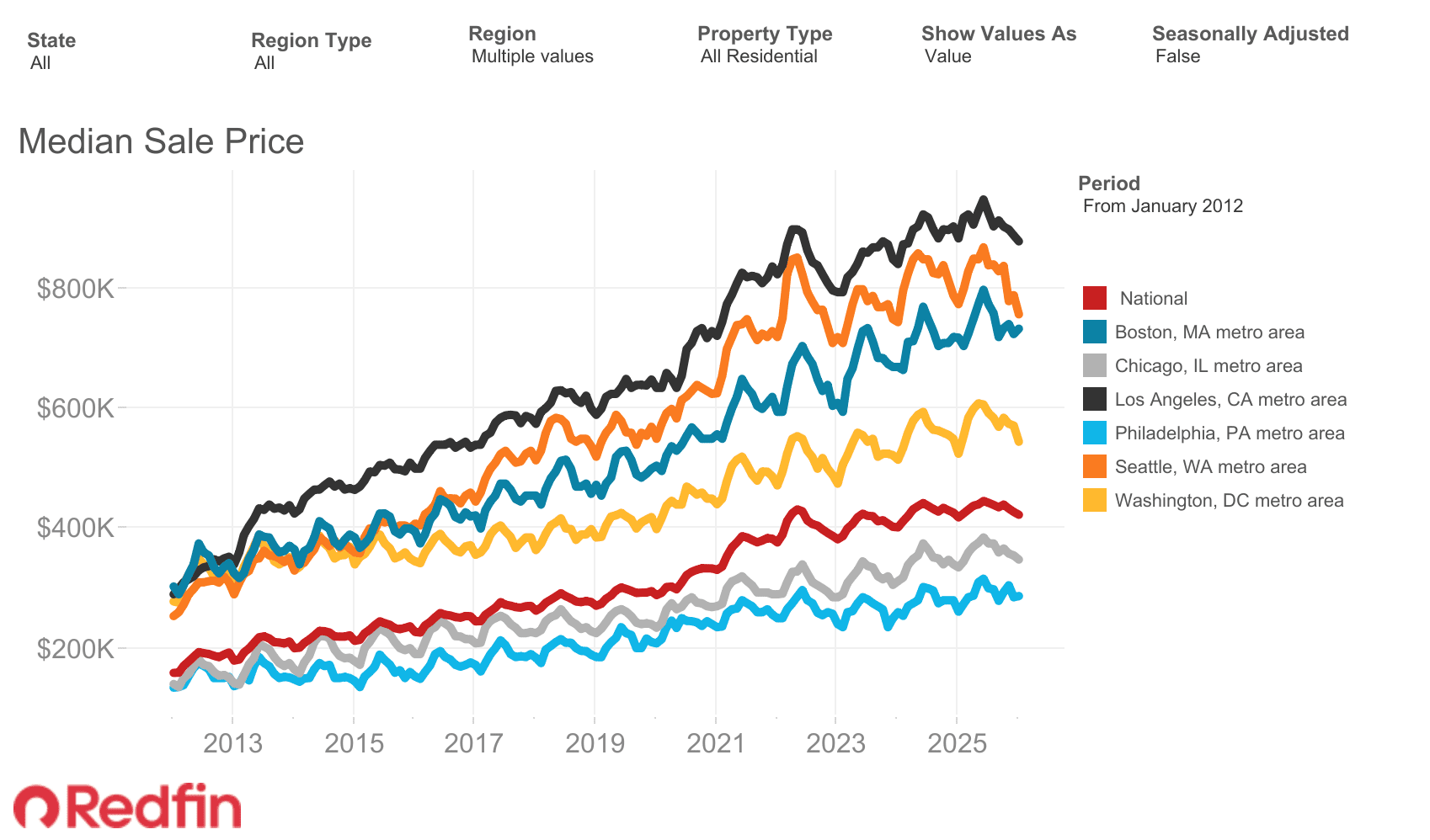 The median sales price recently hovered around $410,000, while the average exceeded $520,000.
Despite higher mortgage rates, home prices in Atlanta have not collapsed. Instead, pricing has stabilized due to limited Atlanta housing inventory and continued inbound migration.
According to Redfin’s Atlanta real estate forecast:
https://www.redfin.com/news/data-center/
Metro Atlanta remains one of the Southeast’s most competitive yet balanced markets.
Why the Metro Atlanta Housing Market Is Still Growing

Population Growth Is Driving Demand
The Atlanta Regional Commission projects that Metro Atlanta could add nearly 3 million residents by 2050.
Long-term population growth creates housing demand — and demand supports values.
You can review ARC projections here:
https://atlantaregional.org
Diverse Job Market
Unlike single-industry cities, Metro Atlanta benefits from:
• Logistics (UPS, Delta)
• Film & Entertainment
• Fintech & Tech Startups
• Healthcare & Research
Because employment remains diversified, the Metro Atlanta housing market avoids dramatic volatility.
Relative Affordability
 Compared to Austin, Nashville, or coastal markets, Metro Atlanta still offers:
• Larger homes
• Yard space
• Strong suburban school districts
• More price flexibility
This is why relocation buyers continue targeting areas like:
• Milton
• East Cobb
• Gwinnett County
• South Fulton
If you’re considering relocation, 👉 explore our guide:
Atlanta Real Estate Forecast: What Happens Next?
The Atlanta real estate forecast for 2026 suggests:
• Slower price growth (not decline)
• Stabilized buyer competition
• Continued suburban demand
• Strong new construction activity
Builders are adding supply. However, resale inventory remains limited due to homeowners holding low-interest mortgages.
As a result, we expect:
• Strategic negotiations
• Seller concessions in some price ranges
• Continued strength in the $400K–$700K bracket
How Buyers Should Approach the 2026 Metro Atlanta Housing Market
First, get pre-approved.
Next, define non-negotiables.
Then, understand micro-market differences.
For example, East Cobb behaves differently than South Fulton. Meanwhile, Milton differs from Upper Westside in both pricing and competition.
If you’re new to investing, 👉 visit www.UpgradeAtlanta.com/first-time-investor-why-atlanta-is-a-smart-place-to-start
Additionally, evaluate:
• Property taxes by county
• School district impact
• New construction incentives
• Long-term appreciation corridors
How Sellers Should Navigate Atlanta Housing Market Trends
 Although demand exists, buyers are more selective.
Therefore:
• Price correctly from day one
• Invest in professional photography
• Use video marketing
• Target relocation buyers
• Implement a coming-soon strategy
Homes with strong visuals outperform average listings — especially in competitive suburban markets.
Final Thoughts on the Metro Atlanta Housing Market
The Metro Atlanta housing market is not overheated. It is not collapsing. Instead, it is maturing.
While interest rates affect affordability, long-term fundamentals remain strong:
• Population growth
• Job diversity
• Inventory constraints
• Relative affordability
That combination keeps Atlanta real estate strategically attractive.
If you’re thinking about buying, selling, or investing, let’s evaluate your position carefully.
Because in 2026, success in the Metro Atlanta housing market is less about timing — and more about strategy.

Join The Discussion